10 Best Outdoor Led Display Options for Stunning Visibility?
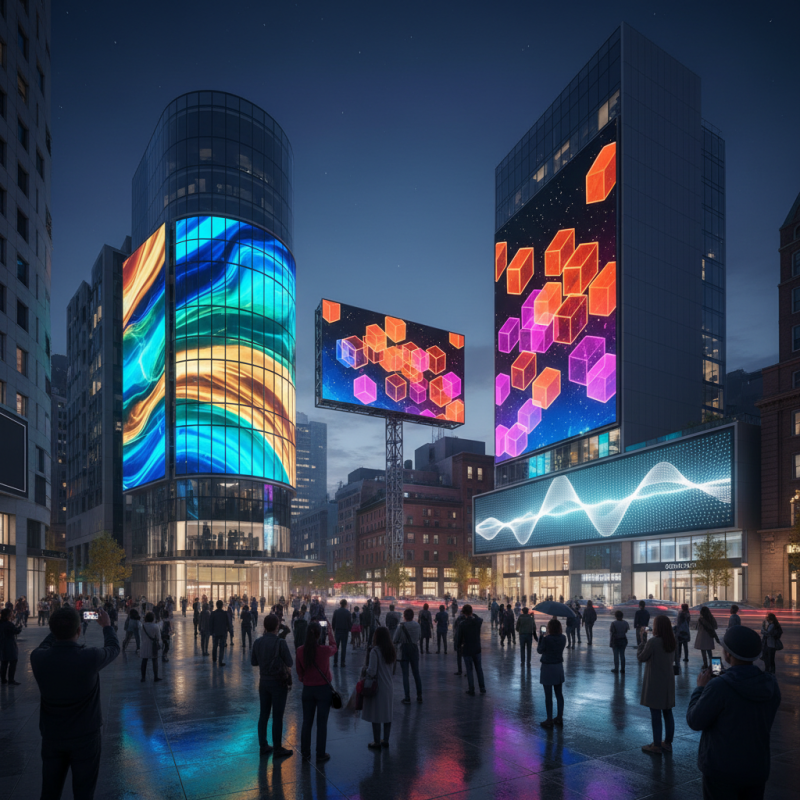
In today’s visually driven world, an Outdoor LED Display is essential for effective communication. From promoting events to advertising products, these displays capture attention like no other. With vibrant colors and impressive brightness, they stand out in various lighting conditions.
Choosing the right outdoor display can be challenging. There are many options available, each with its unique features. Some displays offer high resolution for detailed images, while others focus on durability against weather elements. It's important to consider the specific needs of your audience and environment.
The right display can significantly enhance visibility and engagement. However, not every option meets all requirements. Sometimes, compromises are necessary, leading to less than perfect choices. Understanding these trade-offs is crucial for achieving the best results with your Outdoor LED Display.
Top Features to Consider When Choosing Outdoor LED Displays
When selecting outdoor LED displays, there are several key features to consider. Brightness is essential; high brightness ensures visibility even in direct sunlight. Look for displays with at least 5,000 nits for optimal performance outdoors. Resolution is another important aspect. A higher pixel pitch offers clearer images. Aim for a pixel pitch of 10mm or less for fine detail.
Durability cannot be overlooked. Outdoor displays should be built withstand weather elements. Consider the enclosure rating; an IP65 rating or higher is recommended for protection against moisture and dust. Energy efficiency is also vital. LED displays consume less power, making them cost-effective over time.
Connectivity options play a crucial role. Ensure the display supports various input formats for versatility. Some models have built-in Wi-Fi or Ethernet for seamless updates. However, it's worth noting that not all displays can adapt to changing environments. Some may struggle with color accuracy over time or fail to cope with temperature fluctuations. It's crucial to research and weigh these factors thoroughly before making a decision.
10 Best Outdoor LED Display Options for Stunning Visibility
| Display Size |
Resolution |
Brightness (nits) |
Viewing Angle |
IP Rating |
Average Lifespan (hours) |
| 55 inches |
1920 x 1080 |
5000 |
160° |
IP65 |
100,000 |
| 75 inches |
3840 x 2160 |
6000 |
170° |
IP66 |
100,000 |
| 49 inches |
1280 x 720 |
4000 |
150° |
IP54 |
80,000 |
| 65 inches |
2560 x 1440 |
5500 |
160° |
IP65 |
90,000 |
| 85 inches |
3840 x 2160 |
7000 |
175° |
IP67 |
100,000 |
Types of Outdoor LED Displays: Which One Suits Your Needs?
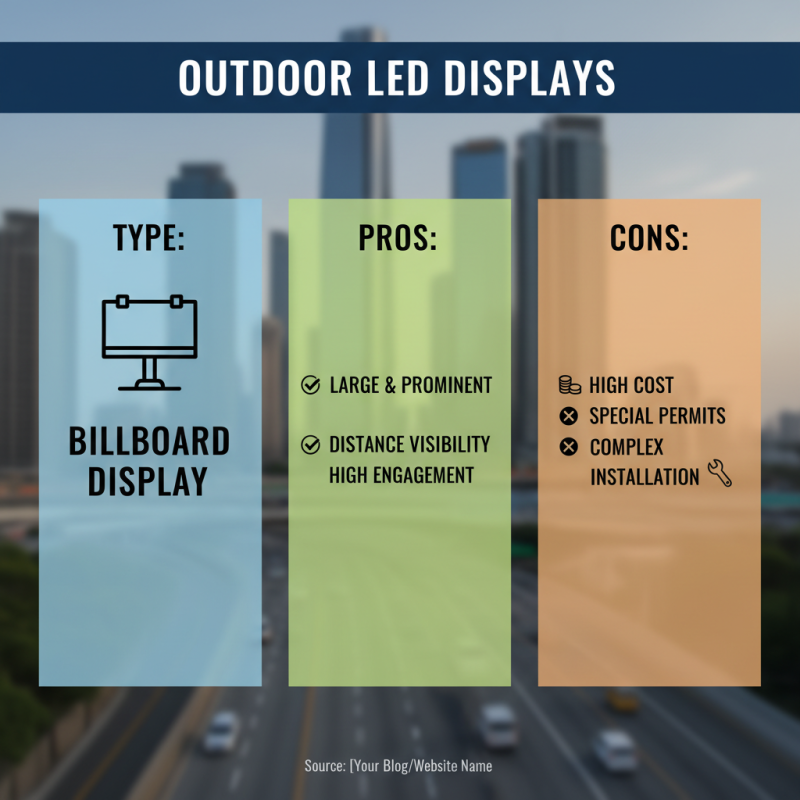
When considering outdoor LED displays, several types cater to different needs. One common option is the billboard display. These are large and prominent. They catch attention from a distance. However, they can be costly and may require special permits. Additionally, installation can be complex, leaving some users feeling overwhelmed.
Another popular type is modular displays. These can be customized based on specific needs. They are flexible in size and shape. Users can expand or reduce the display as required. However, building a cohesive image can be challenging. Misalignment or gaps might occur if not handled correctly.
Portable displays offer versatility for events and promotions. They can be set up and taken down easily. Although they provide convenience, they may not always deliver the same brightness as fixed installations. Battery life can be a concern as well. Each type has its strengths and weaknesses, making careful consideration essential for optimal use.
Comparison of Brightness Levels for Optimal Daytime Visibility
When selecting outdoor LED displays, brightness is crucial. Daytime visibility is often impacted by various factors, including ambient light. Research indicates that an optimal brightness level for outdoor displays is around 5,000 to 10,000 nits. This ensures that your content remains visible, even under direct sunlight. Displays with lower brightness struggle in bright conditions, making information hard to read.
Tips: Choose displays with adjustable brightness settings. This allows you to optimize readability throughout the day. Regularly assess visibility in various lighting conditions to ensure effectiveness.
Another important detail is color contrast. High contrast ratios enhance visibility, particularly in daylight. For instance, a ratio of 1000:1 is often recommended. It helps ensure that messages stand out clearly. Ignoring this can lead to dull displays that fail to attract attention.
Tips: Test different color combinations. What works at dusk may fail during midday. Be prepared to make adjustments based on how consumers interact with your display.
Considering ambient conditions is also vital, such as heat and dust. Even high-quality displays may falter if not properly shielded. Regular maintenance is essential for longevity and performance. Keeping displays clean can elevate visibility dramatically.
10 Best Outdoor LED Display Options for Stunning Visibility
This chart compares the brightness levels of various outdoor LED display models, showcasing their capabilities for optimal daytime visibility. Higher brightness levels indicate better performance in bright outdoor environments.
Durability and Weather Resistance: Essential for Outdoor Use
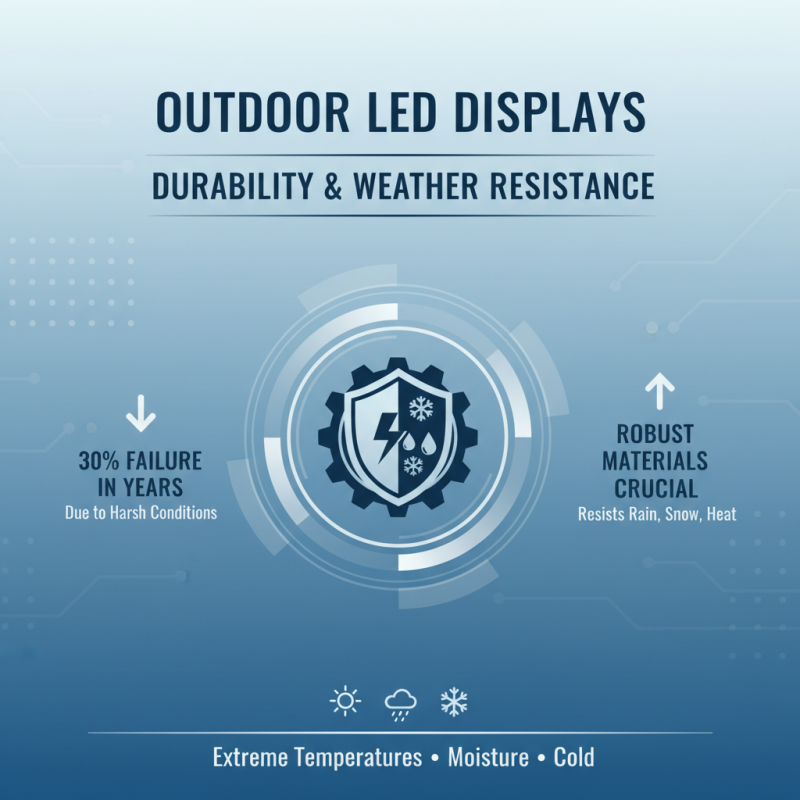
When selecting outdoor LED displays, durability and weather resistance are crucial. Research indicates that around 30% of outdoor displays fail within the first three years due to harsh conditions. These displays face rain, snow, and extreme temperatures. Thus, materials used in construction must be robust.
Many reports highlight that waterproof and dustproof ratings, such as IP65 or better, are ideal. They ensure the display can withstand moisture and debris. Additionally, high-brightness LEDs are important for visibility under direct sunlight. Regular maintenance is often necessary to maximize longevity. Poorly designed displays may suffer from color fading or hardware issues over time.
Another point to consider is heat dissipation. Displays without adequate thermal management can overheat, leading to system failures. According to industry standards, a reliable display should operate efficiently in both high and low temperatures for extended periods. Manufacturers must prioritize thermal solutions to enhance performance. Users should be cautious of displays that promise too much without proven durability.
Cost-Effectiveness and Return on Investment for Businesses
Investing in outdoor LED displays can significantly impact a business’s visibility. When placed in high-traffic areas, these displays capture attention effectively. Bright colors and dynamic content draw in potential customers. However, the initial investment can be daunting for some businesses. It's essential to evaluate the expected return on investment meticulously.
Cost-effectiveness is a key factor in this decision. Over time, energy-efficient LED displays can reduce electricity costs. Maintenance is also generally lower compared to traditional advertising methods. Businesses should consider lifespan; high-quality displays last longer. However, not all LEDs are created equal. Some cheaper options might not deliver the same energy savings or durability.
Measuring the success of an LED display can be challenging. Businesses should track foot traffic and sales before and after installation. Feedback from customers can provide insight too. Yet, relying solely on numerical data may not capture the full story.
Adjusting strategies based on this data can be vital for maximizing impact. Investing wisely ensures that visibility translates into profit.